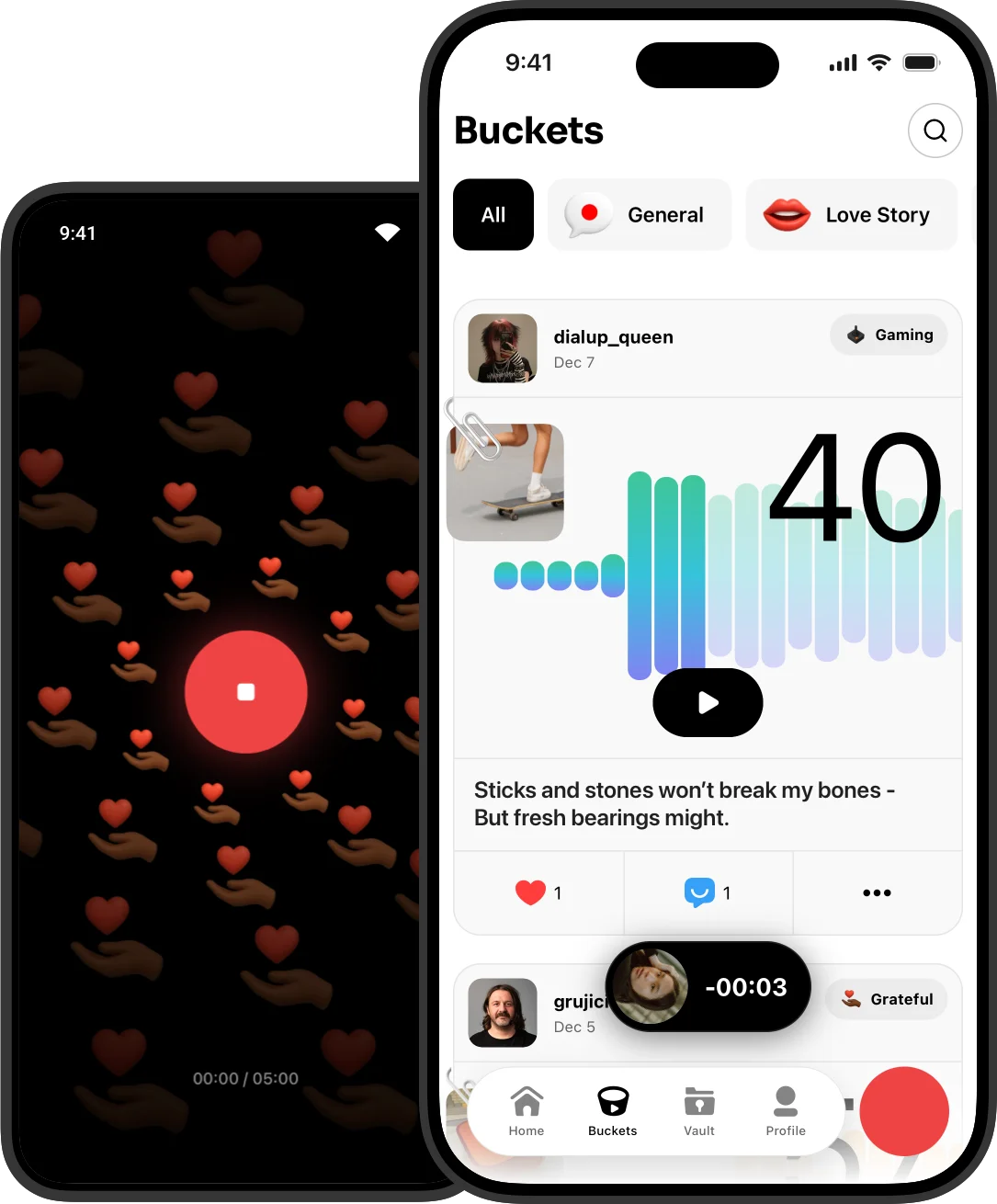

Voice is the most natural interface humans have. Long before we typed, posted, or recorded video, we spoke. Tone, pauses, emotion, hesitation, excitement — all of these live in voice, and none of them translate well into text. Emojis tried to help. Reactions tried to help. Video helped, but introduced a new problem: performance.
Not everyone wants to be on camera. In fact, many people don't.
Video demands presence, appearance, lighting, confidence, and often a kind of performative energy. Voice removes most of that friction. You don't need to show your face. You don't need to polish yourself. You just need to speak.
That reduction in friction matters more than it seems.
Social platforms grow when expression becomes easier, not harder. Text lowered the barrier compared to long-form writing. Images lowered it further. Stories lowered it even more by being ephemeral. Voice takes the next step by letting people express thoughts as they form — without the cognitive overhead of typing or the self-consciousness of video. Short voice posts, often under a minute, capture thoughts without demanding production value.
There is also a shift happening in how people consume content. We listen while walking, commuting, cooking, or resting our eyes. Audio fits into life in a way that screens don't. Podcasts proved this at scale. Voice notes proved it in private messaging. The next logical step is voice-based social sharing.
Another key factor is authenticity.
Voice is hard to fake. You can edit text endlessly. You can curate images. You can script and reshoot video. But voice carries subtle signals that reveal intention and emotion almost immediately. This makes voice-based content feel more honest, more human, and more intimate.
That intimacy changes how people interact. Instead of chasing likes, users tend to listen. Instead of skimming through endless feeds, they engage with topics they actually care about. Instead of reacting instantly, they reflect. Voice encourages slower, more thoughtful interaction — something that modern social media has largely lost.
Asynchronous voice is especially important here. Real-time audio works well for conversations, but it requires everyone to be present at the same moment. Asynchronous voice lets people speak when they want and listen when they can. It combines the depth of conversation with the flexibility of modern life. That's the idea behind Vocial — a voice-first social network built around this principle.
We've already seen glimpses of this shift. Voice notes replaced long text messages for many people. Audio stories and clips gained traction. But most platforms still treat voice as a feature, not a foundation.
That's where the next generation of social platforms will differ.
Instead of forcing voice into existing formats, they are built around it. Expression first, performance second. Listening as important as posting. Presence without pressure.
Voice won't replace text or video. It doesn't need to. But it fills a gap those formats never could. It allows people to share thoughts as they sound in their head, not as they look on a screen.
Social media has spent years optimizing for reach and engagement. Voice brings the focus back to connection.
And that's why voice isn't just another format — it's the next one.