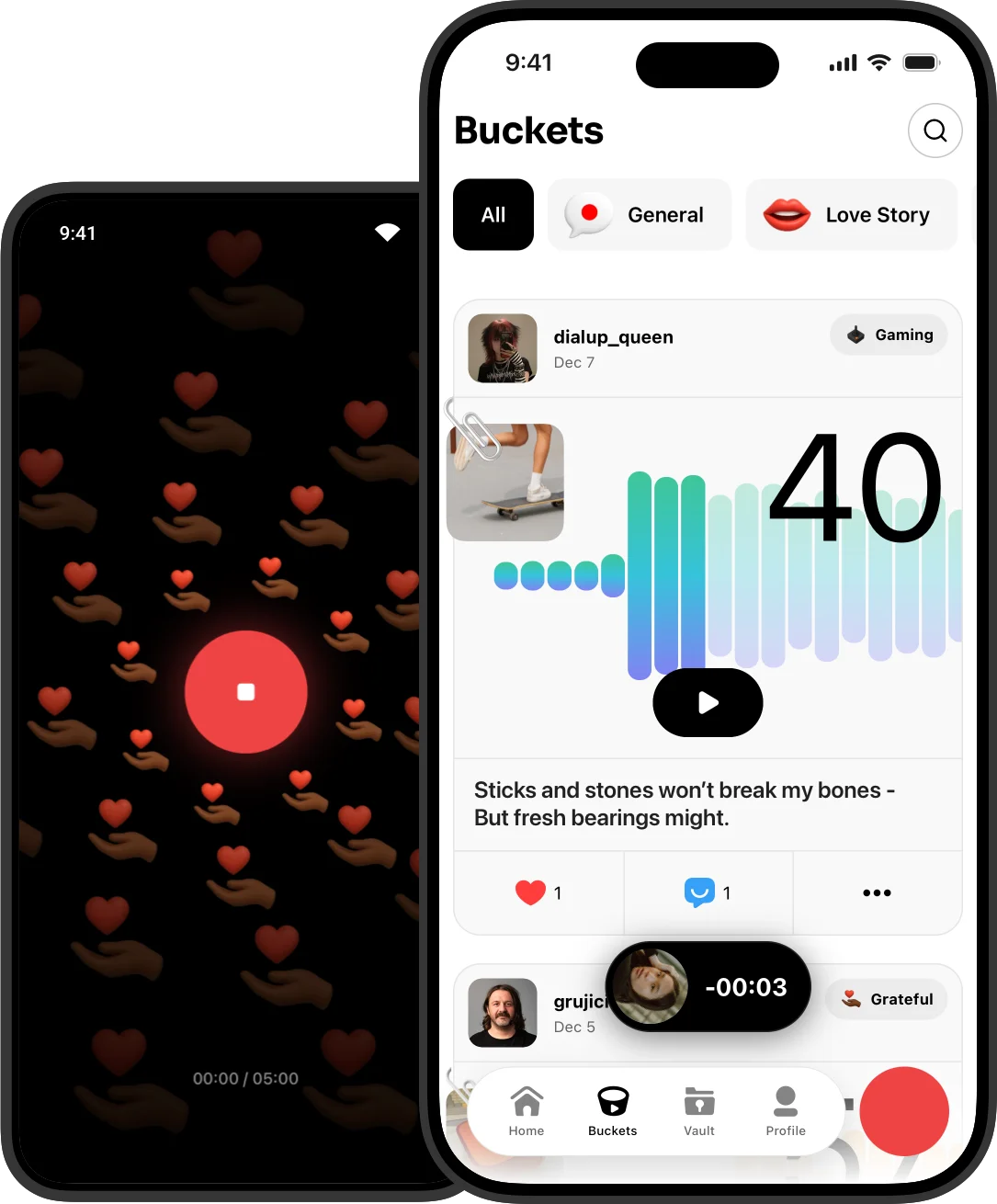

Text is efficient, but it's also limiting. It flattens emotion. Tone gets lost. Context disappears. A simple sentence can sound cold, sarcastic, or misunderstood depending on how it's read. Gen Z is highly aware of this, and voice solves that problem instantly.
With voice, meaning travels intact.
A laugh, a pause, a change in tone — these small details carry intention far better than words on a screen. Saying "I'm fine" can mean ten different things in text. In voice, it usually means exactly one.
There's also speed.
Typing forces you to slow your thoughts down and translate them into written form. Voice keeps up with how the brain actually works. You think, you speak, you send. Short voice posts — under a minute — capture complete thoughts without demanding hours of editing. For a generation that values immediacy and flow, that matters.
Another reason is authenticity.
Gen Z is deeply skeptical of polished online personas. Perfect captions and carefully crafted messages feel performative. Voice feels real. You can hear uncertainty, excitement, hesitation, confidence. It's harder to fake and easier to trust.
That trust changes how people connect. Voice messages feel personal even when they're casual. They feel closer to a conversation than a post. This is why voice notes often replace long text threads, especially when something actually matters.
There's also less pressure.
Text invites overthinking. Read it again. Rewrite it. Delete it. Send it. Unsure how it sounds. Voice lowers that mental load. You say what you mean and move on. For a generation already overwhelmed by constant communication, reducing friction is a big deal.
Multitasking plays a role too.
Gen Z listens while walking, commuting, gaming, or lying on their bed staring at the ceiling. Voice fits into moments where typing doesn't. It doesn't demand full visual attention. It blends into daily life instead of interrupting it. That's why voice-first platforms let you listen when you want, not just when you're glued to a screen.
Importantly, voice also offers privacy without isolation.
You don't need to show your face. You don't need to perform for an audience. You can be present without being visible. That balance is especially appealing to a generation that values self-expression but resists constant exposure.
Text will always have its place. It's searchable, scannable, and useful. But for expressing feelings, thoughts, and personality, Gen Z increasingly reaches for voice.
Not because it's new.
Because it feels right.